Monday, 23 June 2014

The Abbey of Fossanova

This Cistercian abbey lies quite near the mountains near the train station of Priverno/Fossanova about a 30 minute drive away from the house. It is very old, plain but beautiful. It is where St Thomas Aquinas died. You can walk around the abbey and part of the monastery.

They make their own biscuits at the abbey bakery and they are delicious. There is a bar (yes in a monastery!) and also a lovely restaurant. It is a great half day visit. If you feel up to it, there are some walks in the woods opposite the monastery. If you are very lucky and are there during August, there is a festival with artisans selling a variety of goods, artisanal beer and good food. Also there is flag tossing in medieval costume!


Domitian's Villa

The Roman Emperor Domitian built the villa on the shores of Lago di Paola in the first century bc. Lago di Paola is the lake which lies between Sabaudia and the sea, about a 15 minute drive away from my parent's house. You can now visit the ruins but only with a guide. It is well worth it, especially if you enjoy history as I do. However, the tours are only in Italian and only on certain dates and at certain times. Even if you speak no italian, you can go along and look at the ruins, well preserved roman toilets and an amazing underground water cistern. Bear in mind though that there is a lot of walking on uneven ground. Wear comfortable shoes and take water in the summer months. Also, you will need to take your car as all visitors drive to the entrance of the archaeological site in a convoy.

To organise the visit, you must go to the Parco Nazionale di Circeo visitor centre in Via Carlo Alberto, 107, near Sabaudia. This is near the outskirts of Sabaudia near the forest. Enquire at the main desk and they will be able to tell you the dates and times of the tours as well as the cost. Also ask if there is a tour in English, this is unlikely, but you never know!

This under ground water cistern is truly amazing. It's like entering a huge cathedral. The Romans took their water systems very seriously, so the cistern is very well constructed with beautiful arches. It also is lovely and cool, great to get away from the intense heat for a while during the summer!


A trip to the Lepini mountains

The Abbey of Valvisciolo

Up in the mountains near Norma in Southern Lazio is the Abbey of Valvisciolo. The abbey of Fossanova is more well known and worth a look as well, but this abbey is more remote and really lovely. It was built in the 8th century by Greek monks and then reconstructed in the 13th century by the Knights Templar. There is also a beautiful cloister which is also well worth a visit.


The church within is dedicated to St Peter and Paul. In the old dispensarium, there is an art gallery 'Galleria Stanislao White' named after an old abbot. There are works by Durer, Rembrandt, and Goya amongst others.

The medieval town of Bassiano

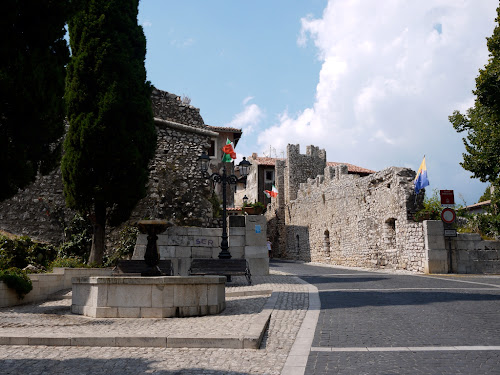
I found this old town last summer in 2012 after travelling around the area for nearly 30 years! It's amazing how there is always something new to discover, no matter how well you think you know an area. It was an easy drive from nearby Sermoneta and through the valleys, not too high up in the mountains. The town is very well preserved with a nearly intact castle wall with turrets all the way around the town. Park your car outside the walls and then wander around the town's narrow windy streets at your leisure.


We found a little alimentari (small supermarket) where the owners prepared us a lovely lunch, sampling local cheeses and prosciutto, which is a speciality. Simple, cheap and yummy!


I returned here about a year later on my yearly visit to the area and found a wonderful restaurant hidden away outside the walls of the medieval town. I just have to share it with you! It is called il Belvedere in Piazza Matteotti owned and run by Vittorio and his family. The pasta was delicious but the star was his ice cream! Vittorio is a master ice cream maker and makes his own on the premises. You can stay and have a meal or have an ice cream in a cone to eat as you are wandering around the town. Highly recommended!


San Felice Circeo


San Felice is a very well-known sea side holiday destination for Italians. It was considered an exclusive sea side resort in the 1980s: its marina was full of impressive yachts and boats and the town had posh restaurants and shops. Nowadays, it is less high-class but still retains some of the exclusive feel. It can still cost a lot of money to rent a villa in San Felice during the summer. Millionaires still own some of the secluded villas hidden on Mount Circeo.

There are actually two different San Felices. The older one with medieval origins is on top of the Circeo mountain overlooking the sea. The more modern town is down below, scattered behind the sea. The older town is a beautiful spot, where you can sit and have a coffee in one of the many bars. You can also wander around the small medieval town and have a look at its small boutiquey shops. The more modern town has a lot of shops as well. One of my favourite ice cream shops is here on the Via Tittoni called Il Gelatone. All home made and delicious!

The name Circeo is thought to originate from the witch Circe in Homer's Odyssey. The witch in the book lives on an island and mount Circeo, being so close to the sea, could easily once have been an island, surrounded by the sea.This is also the area where bones of Neanderthal man were found - in one of the many caves that are on the mountain. There are also beautiful grottoes that can be explored by boat. The beaches are easier to get to and are very beautiful, but less remote than the ones near Sabaudia. As you can see, this is an area with lots to offer.


Friday, 26 July 2013

Norma and Norba

Up in the Lepini mountains, 410m altitude, there are two towns next to each other on two mountain tops overlooking the drained pontine marshes. The drive up there has a few stomach-turning hair pin bends, but if you can brave them, there are great rewards up at the top! Norma is the more modern of the two towns. It was established during the medieval period. Norba to the north west, however, is an ancient Roman town, now in ruins, gradually being uncovered by archaeologists. You can wander around at your leisure. There is no entrance fee, but be careful as there area is not well looked after and is rather uneven! Bizarrely, the cliff top is also used by people who paraglide, so don't be surprised when people jump off the cliff top! You can tell who they are - they are the people who are wandering around with giant backpacks on their backs.

Norba was abandoned by its inhabitants after being attacked and destroyed. They created the nearby town of Norma. It is surrounded by thick roman walls, dating back to the 4th century bc. There are ruins of two acropolis, temples and roman streets and homes. There is a museum in Norma Museo civico archeologico in Via Nazionale in Norma. It is hidden away, but if you ask locals or follow the signs you should be able to find it. The custodian is very enthusiastic and friendly. We we fortunate enough to have a private tour!


Norma has a few restaurants, the best I have found is La Piccola Fontana with beautiful views over the Pontine Plain. There is also a pizza a taglio place in the square which is very reasonable. Here you can have slices of tasty pizza, home made pasta and sit at tables on the square. A good snack.


Tuesday, 10 April 2012

Sensational Sermoneta

Sermoneta is in the hills overlooking the Pontine Marshes in the Lepini Mountains, 257 metres above sea level with wonderful views. It is a small town (population of 7480) with a castle, a cathedral and a surrounding wall. Its houses are mainly mediaeval. The Annibaldi built the town in the 12th century. In 1798 the French invaded the town taking with them 30 cannons from the castle.

This is the campanile (bell tower) of the cathedral Santa Maria Assunta. It was built in the 13th century on top of an ancient Roman temple of Cibeles. I have heard a choir singing inside the church - which was lovely.

The castle Caetani in Sermoneta can be visited. There is a fort with a bridge and its prison can be visited too. There is also a museum of ceramics inside the castle. Well worth a visit.


Thursday, 25 August 2011

The Amazing Gardens of Ninfa


My parents visited these gardens a few years ago and had told me how beautiful they were. I managed to go there this summer to see them for myself - and they were right, they are stunning. The best time to visit is in the Spring when all the flowers are out in bloom.

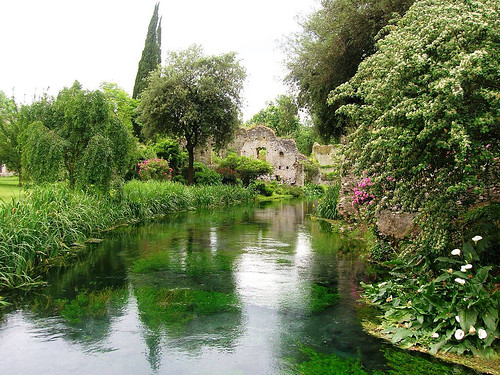
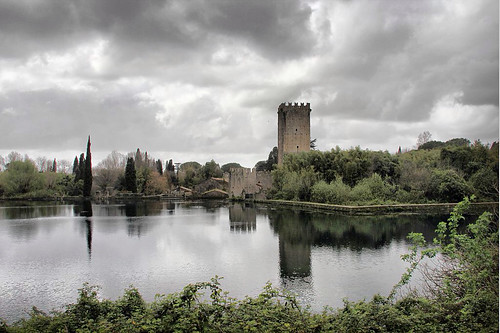
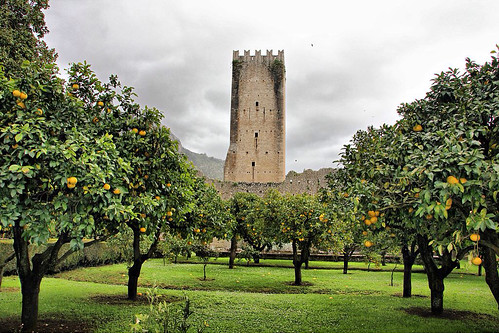
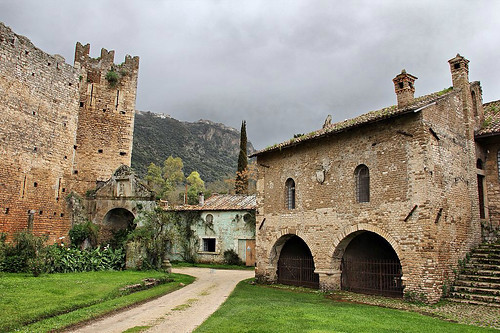
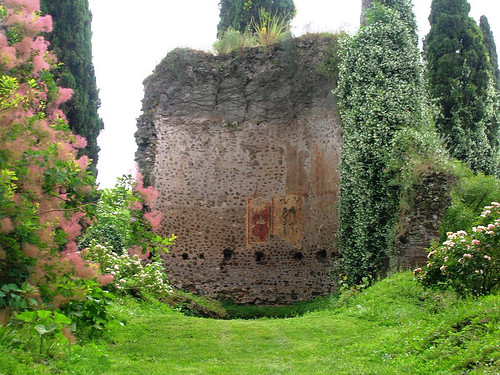
The gardens of Ninfa are set among the ruins of a mediaeval village. It is named after the river which flows through the village. This name also probably has links to Roman times and links to the pagan belief of nymphs living in or around the river. Ninfa was a well-known place in Roman times where people came to stay while travelling along the nearby Via Appia. Around the year 1000 AD it was under Papal control and got drawn into conflicts between the Papal States and the Empire, when it was sacked by Imperial forces. The Frangipane family were in control of it initially and then the Caetani family, who still own the land today. In a local war the village was destroyed in 1382 AD and the population moved to Sermoneta and Norma, two nearby towns. By the middle of the 15th century the village was deserted. There were attempts to repopulate the village during the 18th century, but these failed due to the threat of malaria in the region.

Gelasio Caetani decided to turn the area into gardens based on the 'English style' in the early 1900s. This 'English style' means that the gardens are not manicured, but the plants are managed and left to grow creating a natural effect. There are a range of plants from around the world that thrive here. Banana trees, eucalyptus trees, ferns, bamboo etc. The area of Ninfa is said to have a climate that benefits all these plants which grow side by side among the ruins.

The gardens of Nifa are extensive - 1852 hectares - currently looked after by the Caetani Foundation and the WWF.


Visit the website to look for more information of how to get there and opening times www.fondazionecaetani.org/index.php? The gardens are not open often. All visits are with a guide, and all guides are in Italian. You can still tag along even if you don't speak Italian and enjoy the gardens all the same!